Modern art
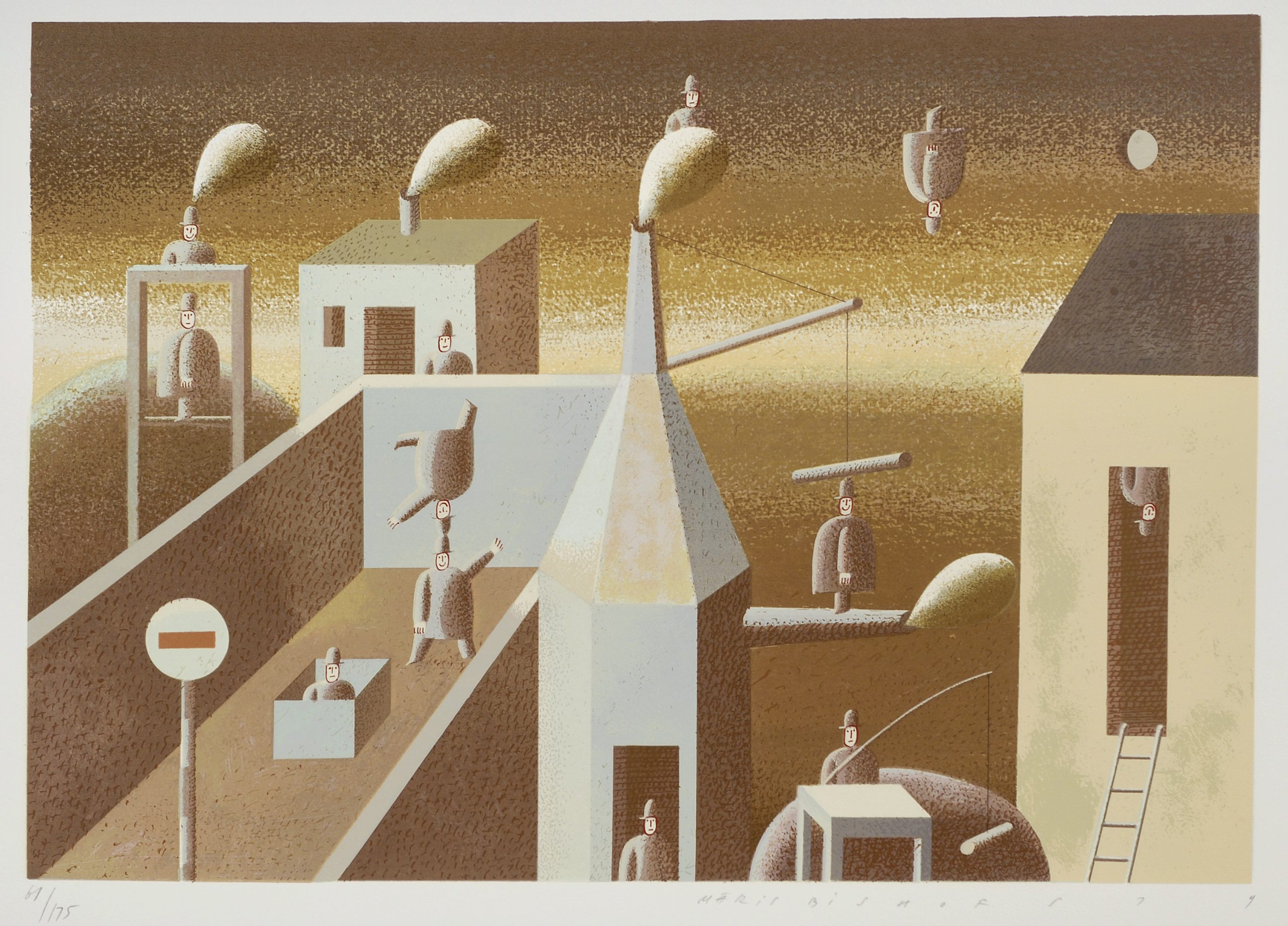
Bishofs Maris
Bishofs 1
$200
25.75 inches wide x 20.75 inches high 65cm wide x 52cm high Lithograph Edition 175
Shipping & Handling: $30
Bishofs was born in 1939 in Rujiena, Latvia. In 1965 he became the first artist to graduate from the Latvian Art Academy with an interior design diploma. In 1972 the artist emigrated to Israel. He lived in Paris in the early 1980’s, but in New York 1984-2003. In the fall of 2003 the artist returned permanently to Latvia. Bishofs’ drawings between 1984 and 2003 were featured in Time Magazine, the Atlantic Monthly, the Washington Post, the New York Times, the Nation, Village Voice, Wall Street Journal, New York Magazine, Barron ‘9s, Hippocrates, and Harper’s. This collection of publications is supplemented by the artist’s drawings in Latvian magazines Dadzis (1963-1966) and Rigas laiks (2001-2003), as well as the newspaper Diena (2002-2004).
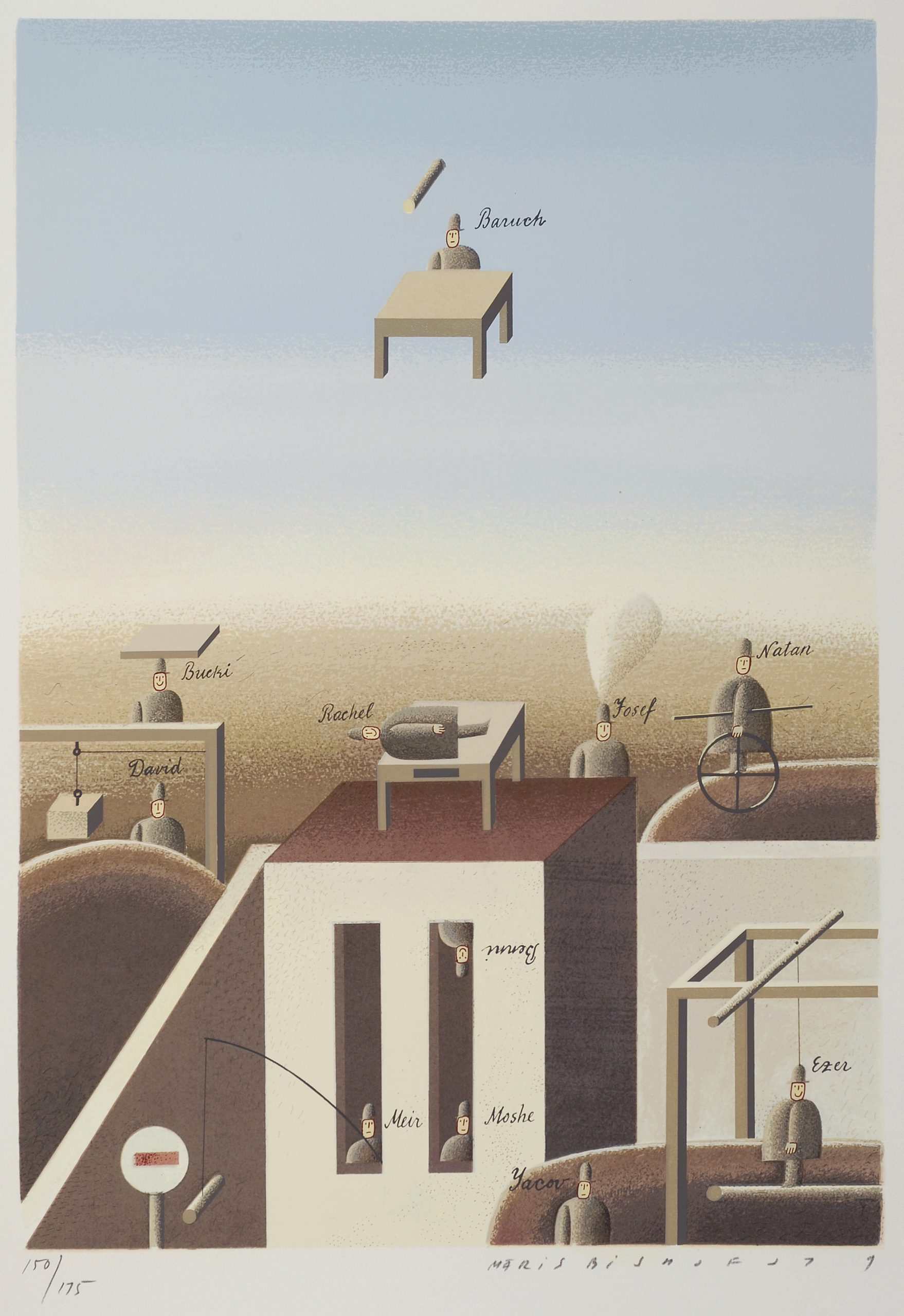
Bishofs Maris
Bishofs 2
$200
20.75 inches wide x 25.75 inches high 52cm wide x 65cm high Lithograph Edition 175
Shipping & Handling: $30
Bishofs was born in 1939 in Rujiena, Latvia. In 1965 he became the first artist to graduate from the Latvian Art Academy with an interior design diploma. In 1972 the artist emigrated to Israel. He lived in Paris in the early 1980’s, but in New York 1984-2003. In the fall of 2003 the artist returned permanently to Latvia. Bishofs’ drawings between 1984 and 2003 were featured in Time Magazine, the Atlantic Monthly, the Washington Post, the New York Times, the Nation, Village Voice, Wall Street Journal, New York Magazine, Barron ‘9s, Hippocrates, and Harper’s. This collection of publications is supplemented by the artist’s drawings in Latvian magazines Dadzis (1963-1966) and Rigas laiks (2001-2003), as well as the newspaper Diena (2002-2004).
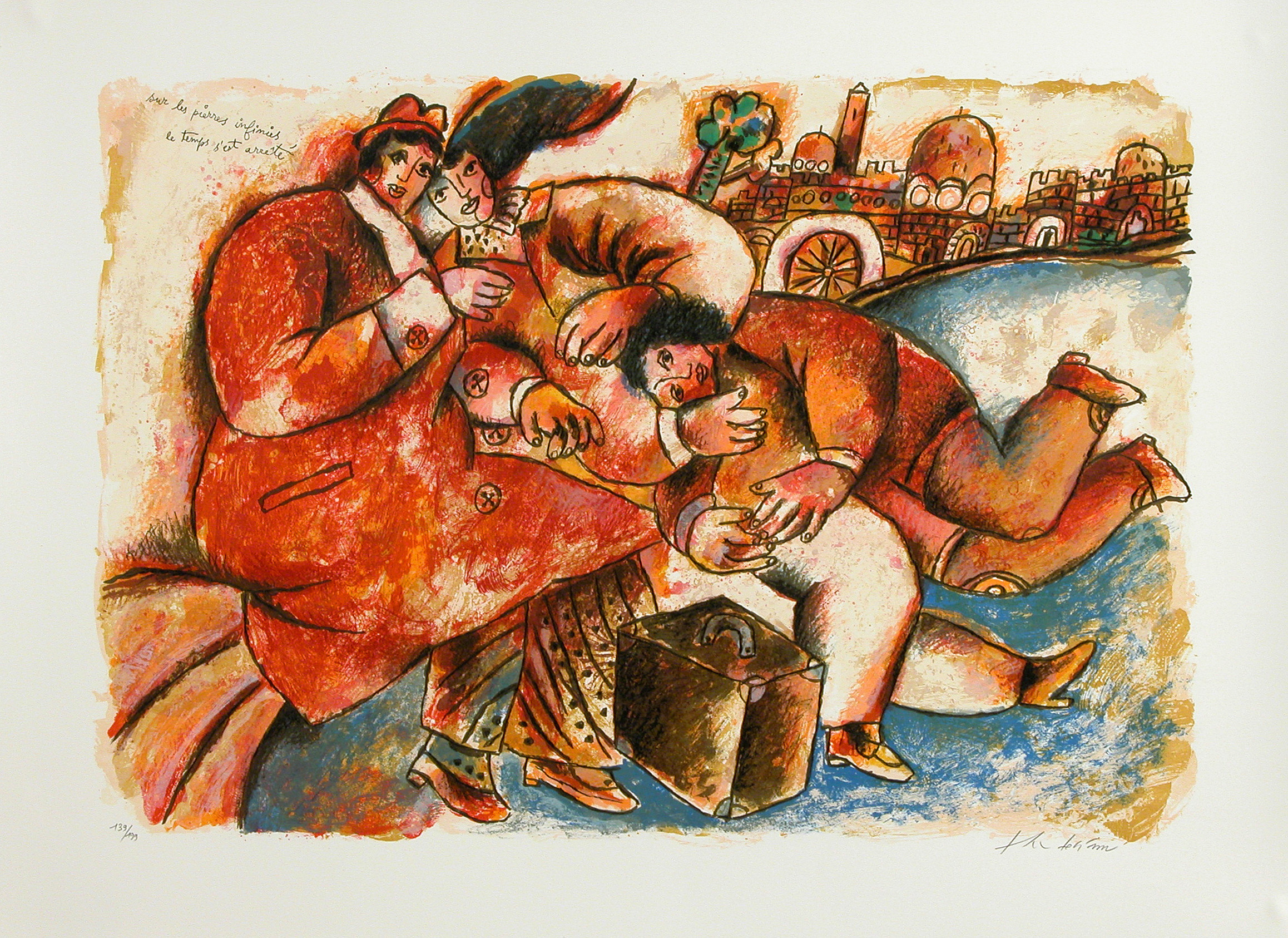
TOBIASSE
Coming to Israel
$200
32 inches wide by 24 inches high 80 cm wide by 60 cm high Serigraph Edition 199
Shipping & Handling: $30
TOBIASSE
In Paris, set apart from the other children by his strange clothes and Yiddish-Lithuanian accent, he grew up solitary, self-dependent and with a strong, prevailing sense of his Jewishness. Essentially self-trained in art, he emerged from the enforced isolation of the German occupation in Paris with an extensive portfolio which enabled him to find work in commercial fields. Continuing as a commercial artist for fifteen years, he developed his painting style in his spare time, often painting through the night.
Finally in 1960, Tobiasse took the Grand Prix at an exhibition of young artists at the Palais de la Mediterranee in Nice.
After 1962, he was at last able to devote himself exclusively to painting, for collectors and galleries have since not ceased to be interested in his work.
Author and colleague Andre Schwartzbart writes of “the strange adventures of Tobiasse, who sees canvasses surge straight from an Elie Wiesel story …” This reference is apt, with Tobiasse portraying his Hassidic-influenced stories on canvas. Schwartz-Bart continues: “I can as well conjure up in my mind my friend Elie deeply brooding over one of these marvels from which he would eventually derive a tale”.
Loading...