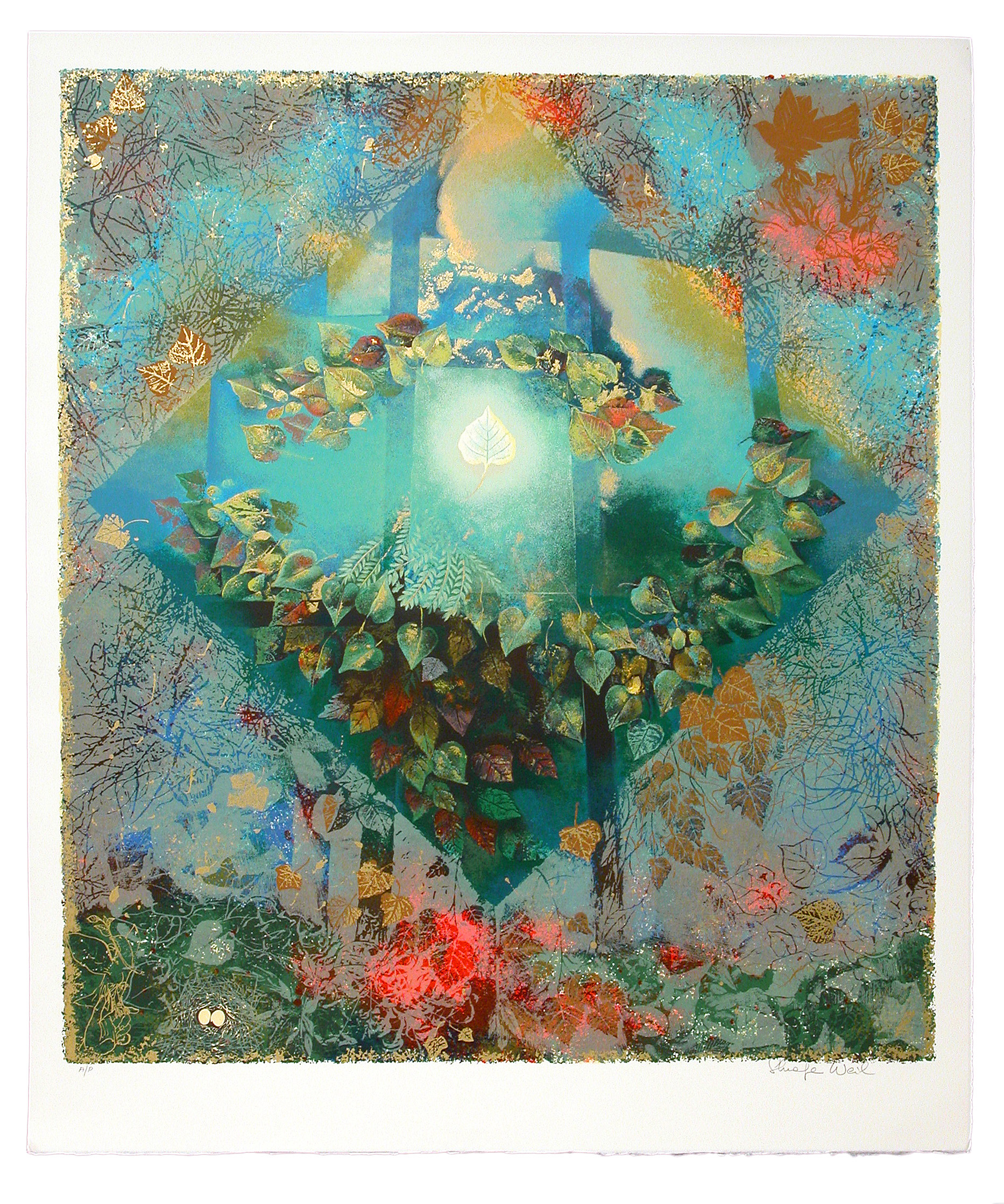
Weil Shraga
S-274 Book of life II
$750
30 inches wide X 35 inches high 76 cm wide X 89 cm high Serigraph 1997 Edition 400
Shipping & Handling: $30
Shraga Weil was born in Nitra, Czechoslovakia in 1918 to a family of teachers, journalists and merchants. His father, a building engineer, who was an amateur painter, sent him to study with a local sculptor and then to the Prague School of Art.
He produced his first graphic works during World War II, part of which he spent as a prisoner. After the war, Weil sailed for Israel on an illegal immigrant ship, eventually arriving in the new country in 1947 and becoming a member of Kibbutz Haogen, where he has been living ever since.
In 1954 Weil spent some time studying murals and graphic techniques at the Academie des Beaux Arts, Paris and Ravenna mosaics with Prof. Severinl.
Shraga Weil’s works have been exhibited in the United States, South America, Canada, Australia, France, the USSR, Switzerland, and in the International Exhibition of Graphic Arts, in Lugano. In 1959, Weil was awarded Tel Aviv’s Dizengoff Art Prize.
Museums and Public Collections
Brandeis University, Waltham, Massachusetts
Boston Public Library
Israel Museum, Jerusalem
William Rockhill Nelson Gallery, Kansas City, MO
Fogg Museum, Harvard University
Los Angeles County Museum
Jewish Museum, New York
Philadephia Museum of Art
Joslyn Museum, Omaha, Nebraska
Judah Magnes Museum, Berkeley, CA
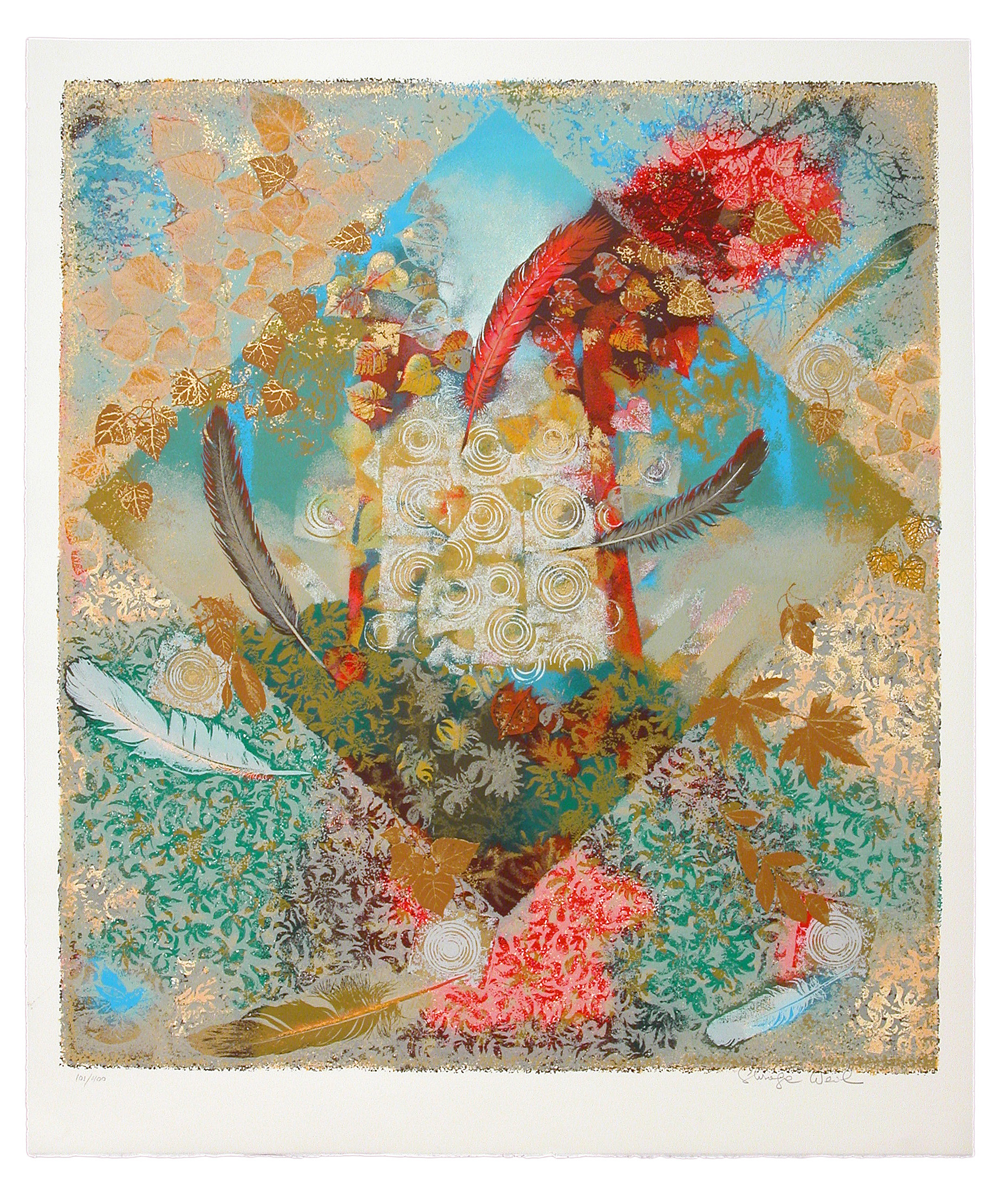
Weil Shraga
S-275 Book of life III
$750
30 inches wide X 35 inches high 76 cm wide X 89 cm high Serigraph 1997 Edition 400
Shipping & Handling: $30
Shraga Weil was born in Nitra, Czechoslovakia in 1918 to a family of teachers, journalists and merchants. His father, a building engineer, who was an amateur painter, sent him to study with a local sculptor and then to the Prague School of Art.
He produced his first graphic works during World War II, part of which he spent as a prisoner. After the war, Weil sailed for Israel on an illegal immigrant ship, eventually arriving in the new country in 1947 and becoming a member of Kibbutz Haogen, where he has been living ever since.
In 1954 Weil spent some time studying murals and graphic techniques at the Academie des Beaux Arts, Paris and Ravenna mosaics with Prof. Severinl.
Shraga Weil’s works have been exhibited in the United States, South America, Canada, Australia, France, the USSR, Switzerland, and in the International Exhibition of Graphic Arts, in Lugano. In 1959, Weil was awarded Tel Aviv’s Dizengoff Art Prize.
Museums and Public Collections
Brandeis University, Waltham, Massachusetts
Boston Public Library
Israel Museum, Jerusalem
William Rockhill Nelson Gallery, Kansas City, MO
Fogg Museum, Harvard University
Los Angeles County Museum
Jewish Museum, New York
Philadephia Museum of Art
Joslyn Museum, Omaha, Nebraska
Judah Magnes Museum, Berkeley, CA
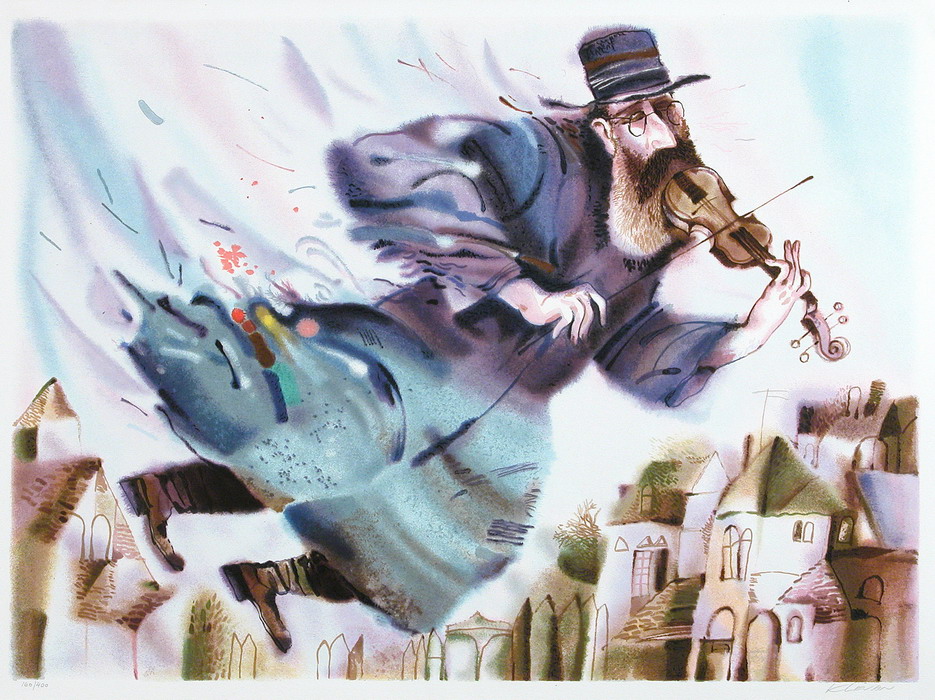
Klevan Alexander
Fiddler on the Roof
$300
38.5" x 26.5" Lithograph 1995 Edition 400
Shipping & Handling: $30
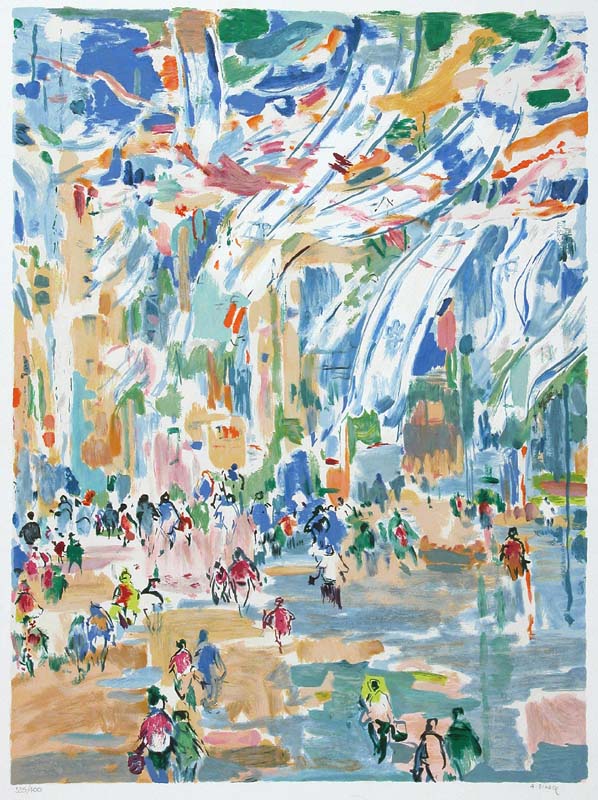
Binder Abraham
Independence Day
$300
26.5 inches wide x 38.5 inches high 67 cm wide x 98 cm high Serigraph 1998 Edition 400
Shipping & Handling: $30
ABRAHAM BINDER – A GREAT MASTER
Particularly memorable are his urban landscapes with their predominance of blues and aquamarines, composed of a profusion of squares and rectangles, crowding one another and covering nearly the entire canvas. The angular shapes are interspersed with radiant dots of red, gold and yellow, like the lights of the big city.
Traces of these shapes are discernible in Binder’s work to this day, in the angularity of splashes of color which, no longer crowded together, are now well separated to create an airy spaciousness. Not only the splashes of color – the intervening space, too – creates figurative effects in the artist’s treatment.
Abraham Binder is not a “cerebral” painter. Neither identified with any particular modern school, nor preaching any narrow artistic doctrine, he is an emotional artist: his inspiration, derived from the heart, leads him on to the most varied range of treatments in his artistic work. In vain might one try to persuade him to define his personal conception of painting. He is not one to indulge in verbal explanations. But his sheer artistic skill, his virtuosity with the paint brush, did impel him to experiment widely with the artistic techniques of the modern age. And his exceptional talent stood him in good stead in all this experimentation.
Binder’s large-scale urban landscapes are not mere constructs to represent our present-day architecture with its pervasive angularity. Made up as they are of large splashes of color, Binder’s unique color composition qualifies these canvases to be ranked among the foremost artistic works in Israeli painting. They are uniquely Binder, very different from what we see in the work of his contemporaries.
He has also done large paintings of Jerusalem – not the Jerusalem of gloom and holiness, but a Jerusalem of contrast to the flat topography of Tel-Aviv; it is this different topography which here provides the challenge for him as a painter. And the colors – the colors are bright, full of light, an inner illumination which seems to emanate from the artist himself, rather than from the sun beating down from above.
So many great artists have built their life’s work upon watercolors. Binder’s watercolors are in no way inferior in their artistic worth to many of those, what with their spontaneity, their translucent quality, their color combinations, and the artist’s ability to say so much with an economy of brush strokes.
Abraham Binder’s insatiable curiosity has advanced him into the front ranks of our nation’s artists.
David Giladi
Loading...