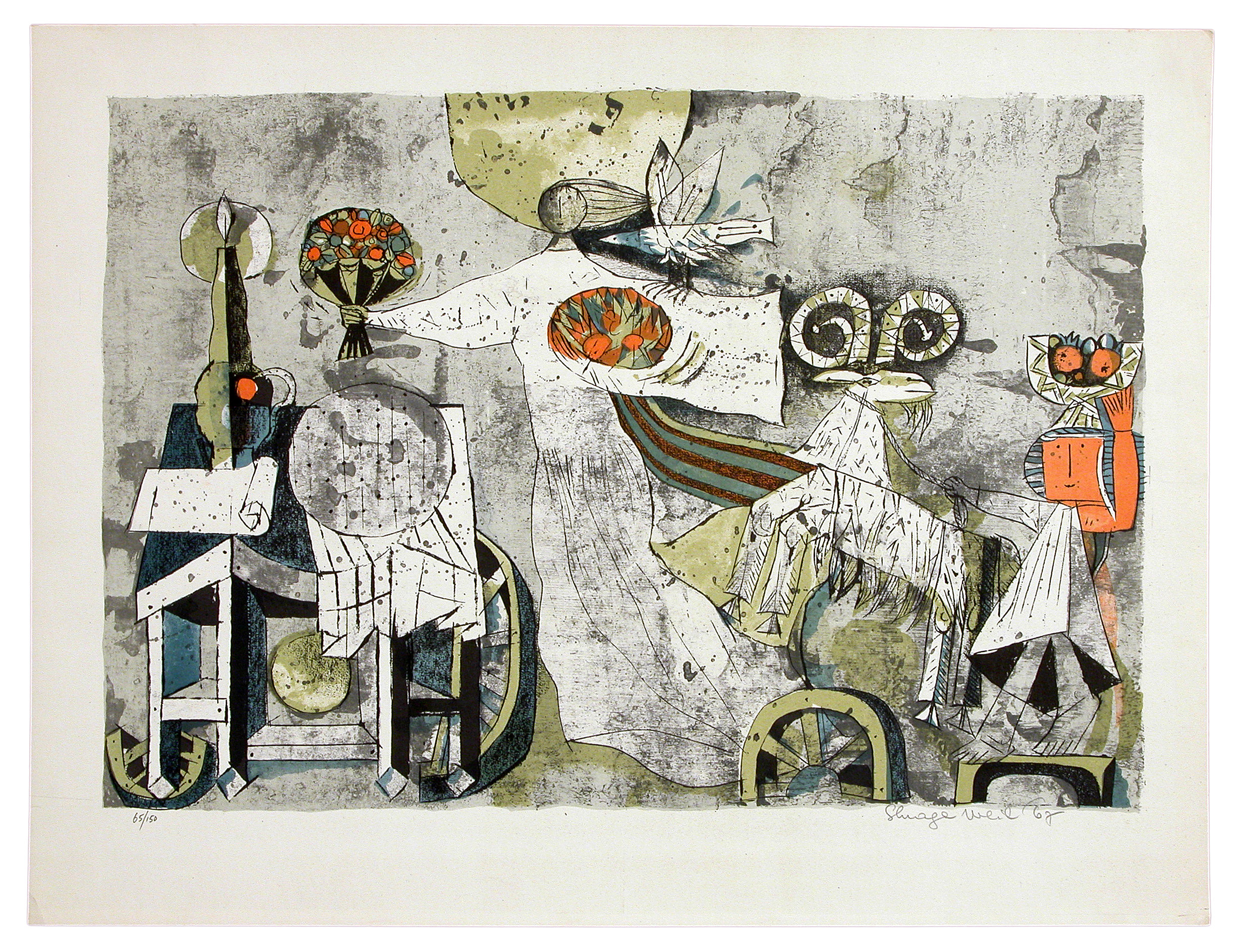
Weil Shraga
S-4 Symbols of Pessach
$400
24.5 inches wide x 18.5 Inches high 62 cm wide x 47 cm high Serigraph 1963 Edition 150
Shipping & Handling: $30
Weil has selected symbols from Jewish tradition and from his Kibbutz experience in his search to fashion a new, viable tradition. Emphasis is placed upon the produce, e.g., flowers fruits; the animals, e.g., birds and goats of the agricultural settlement as well as references to the round matzah and the candle welcoming the festival. The woman moving across the field of textures is gathering the symbols of spring.
Shraga Weil was born in Nitra, Czechoslovakia in 1918 to a family of teachers, journalists and merchants. His father, a building engineer, who was an amateur painter, sent him to study with a local sculptor and then to the Prague School of Art.
He produced his first graphic works during World War II, part of which he spent as a prisoner. After the war, Weil sailed for Israel on an illegal immigrant ship, eventually arriving in the new country in 1947 and becoming a member of Kibbutz Haogen, where he has been living ever since.
In 1954 Weil spent some time studying murals and graphic techniques at the Academie des Beaux Arts, Paris and Ravenna mosaics with Prof. Severinl.
Shraga Weil’s works have been exhibited in the United States, South America, Canada, Australia, France, the USSR, Switzerland, and in the International Exhibition of Graphic Arts, in Lugano. In 1959, Weil was awarded Tel Aviv’s Dizengoff Art Prize.
Museums and Public Collections
Brandeis University, Waltham, Massachusetts
Boston Public Library
Israel Museum, Jerusalem
William Rockhill Nelson Gallery, Kansas City, MO
Fogg Museum, Harvard University
Los Angeles County Museum
Jewish Museum, New York
Philadephia Museum of Art
Joslyn Museum, Omaha, Nebraska
Judah Magnes Museum, Berkeley, CA
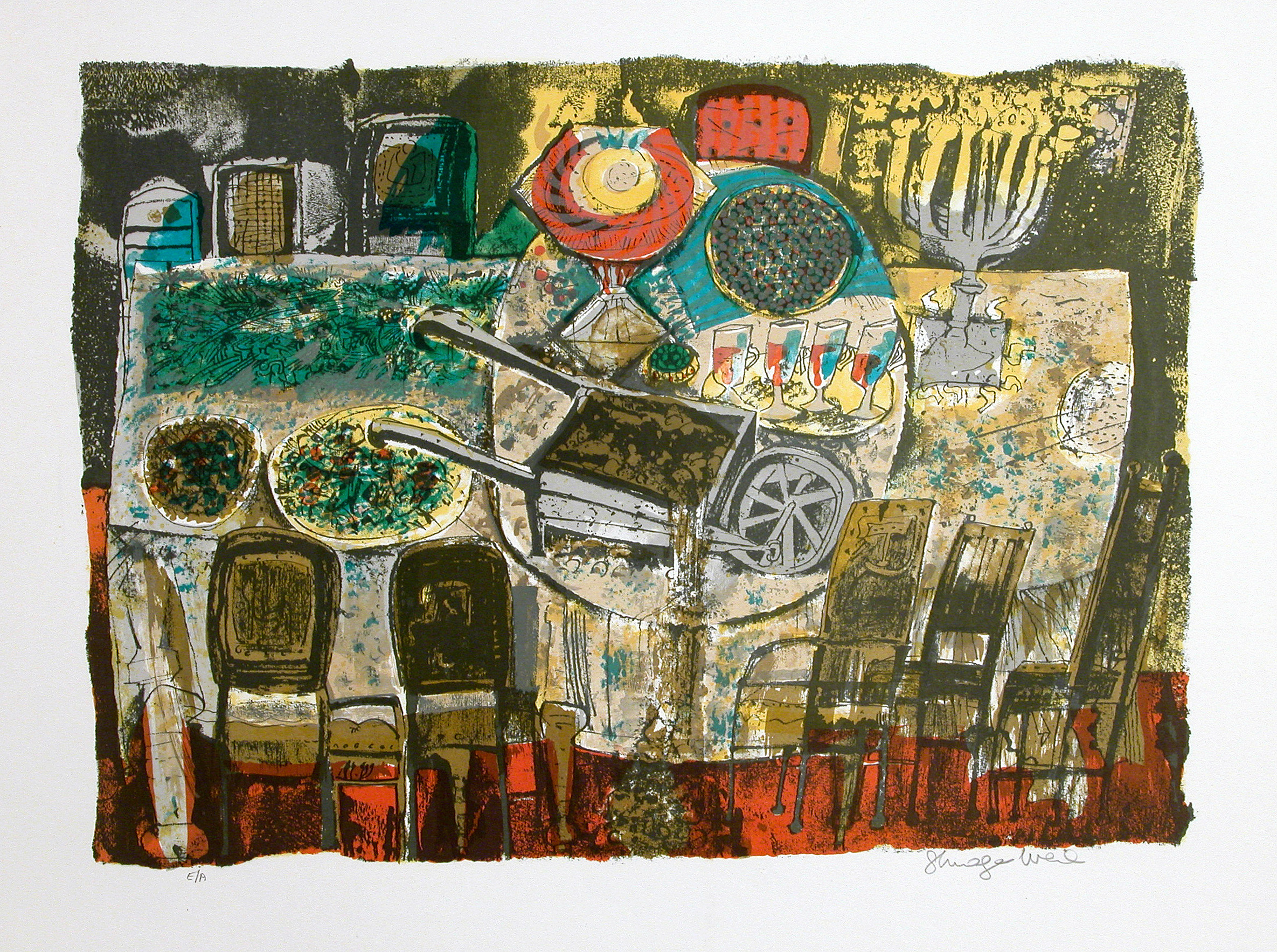
Weil Shraga
S-5 Seder Table
$400
24.5 inches wide x 18.5 Inches high 62 cm wide x 47 cm high Serigraph 1963
Shipping & Handling: $30
Shraga Weil was born in Nitra, Czechoslovakia in 1918 to a family of teachers, journalists and merchants. His father, a building engineer, who was an amateur painter, sent him to study with a local sculptor and then to the Prague School of Art.
He produced his first graphic works during World War II, part of which he spent as a prisoner. After the war, Weil sailed for Israel on an illegal immigrant ship, eventually arriving in the new country in 1947 and becoming a member of Kibbutz Haogen, where he has been living ever since.
In 1954 Weil spent some time studying murals and graphic techniques at the Academie des Beaux Arts, Paris and Ravenna mosaics with Prof. Severinl.
Shraga Weil’s works have been exhibited in the United States, South America, Canada, Australia, France, the USSR, Switzerland, and in the International Exhibition of Graphic Arts, in Lugano. In 1959, Weil was awarded Tel Aviv’s Dizengoff Art Prize.
Museums and Public Collections
Brandeis University, Waltham, Massachusetts
Boston Public Library
Israel Museum, Jerusalem
William Rockhill Nelson Gallery, Kansas City, MO
Fogg Museum, Harvard University
Los Angeles County Museum
Jewish Museum, New York
Philadephia Museum of Art
Joslyn Museum, Omaha, Nebraska
Judah Magnes Museum, Berkeley, CA
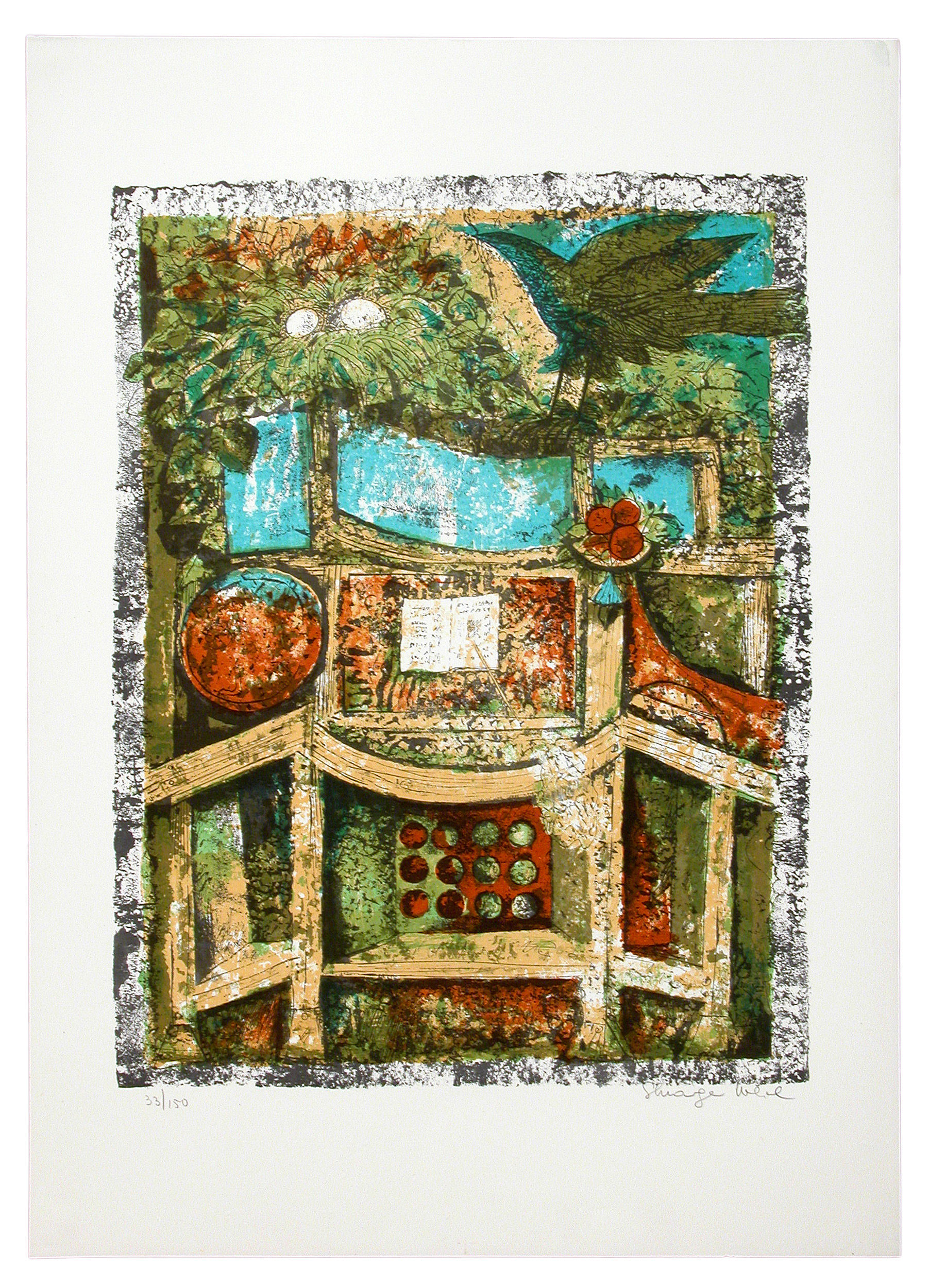
Weil Shraga
S-9 Festival of Spring
$400
19.75 Inches wide x 27.5 Inches high 50 cm wide x 70 cm high Serigraph 1966 Edition 150
Shipping & Handling: $30
The visual foundation of this lithograph is the scribe’s table, whose beams and stanchions firmly support not only the opened manuscript at center, but the nest of eggs, bird, fruit, and the twelve-stoned shield of the high priest, all familiar objects from other Weil works. The formally arranged composition suggests not so much a “festival” as a “ritual” of spring. For there is no bursting forth of greenery or flowers; rather, it is a quiet affirmation of the sure knowledge of the order of things – the confidence that spring must follow winter as surely as chicks must hatch from eggs.
Shraga Weil was born in Nitra, Czechoslovakia in 1918 to a family of teachers, journalists and merchants. His father, a building engineer, who was an amateur painter, sent him to study with a local sculptor and then to the Prague School of Art.
He produced his first graphic works during World War II, part of which he spent as a prisoner. After the war, Weil sailed for Israel on an illegal immigrant ship, eventually arriving in the new country in 1947 and becoming a member of Kibbutz Haogen, where he has been living ever since.
In 1954 Weil spent some time studying murals and graphic techniques at the Academie des Beaux Arts, Paris and Ravenna mosaics with Prof. Severinl.
Shraga Weil’s works have been exhibited in the United States, South America, Canada, Australia, France, the USSR, Switzerland, and in the International Exhibition of Graphic Arts, in Lugano. In 1959, Weil was awarded Tel Aviv’s Dizengoff Art Prize
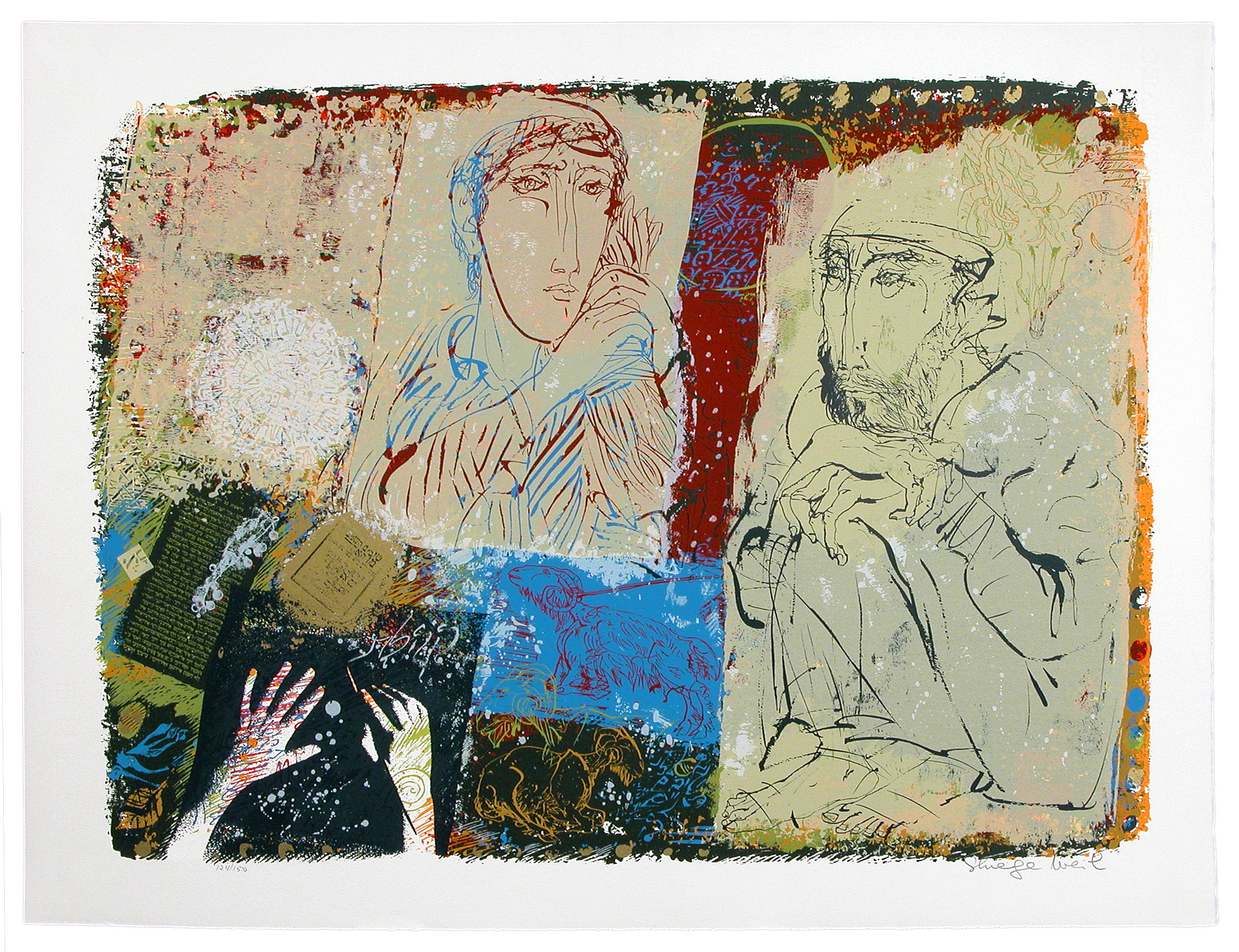
Weil Shraga
S-103 Sketch Book
$500
25.5 Inches wide x 19.75 Inches high 65 cm wide x 50 cm high Serigraph 1970
Shipping & Handling: $30
After finishing his series of seven serigraphs (The Akedah) based on verses from the story of Abraham and Isaac, Weil proposed a kind of epilogye to this work. The print sums up the sense of relief and gratitude that Abraham must have felt upon the redemption of his son; the ordeal had ended and they were still both safe and alive.
Shraga Weil was born in Nitra, Czechoslovakia in 1918 to a family of teachers, journalists and merchants. His father, a building engineer, who was an amateur painter, sent him to study with a local sculptor and then to the Prague School of Art.
He produced his first graphic works during World War II, part of which he spent as a prisoner. After the war, Weil sailed for Israel on an illegal immigrant ship, eventually arriving in the new country in 1947 and becoming a member of Kibbutz Haogen, where he has been living ever since.
In 1954 Weil spent some time studying murals and graphic techniques at the Academie des Beaux Arts, Paris and Ravenna mosaics with Prof. Severinl.
Shraga Weil’s works have been exhibited in the United States, South America, Canada, Australia, France, the USSR, Switzerland, and in the International Exhibition of Graphic Arts, in Lugano. In 1959, Weil was awarded Tel Aviv’s Dizengoff Art Prize
Loading...